
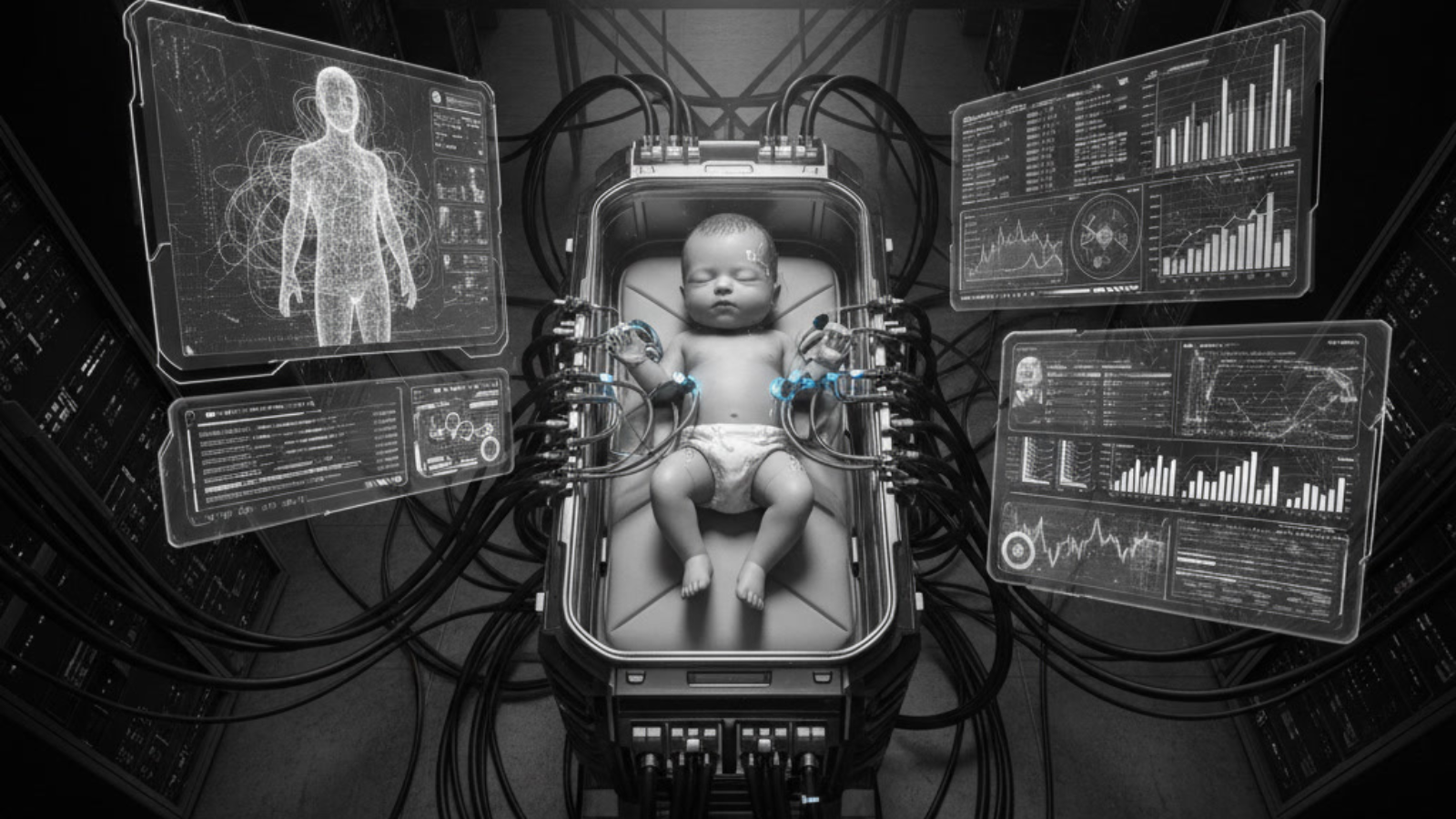
Kids in America have fewer digital rights than any adult in this country — including the ones who exploit them. That's the paradox. No one voted for this. No one debated it. It just… happened. Because the people designing the system realized the truth: if you grab a kid's data early, you own the adult they grow into. That's the whole business model, disguised as "education technology," "family safety," and "learning analytics."
Let's get into it.
01 We Start Tracking Kids Before They Can Walk
Hospitals, insurers, and baby-product manufacturers openly trade infant data. Yes — babies. Literal babies. The Federal Trade Commission fined WW International (formerly Weight Watchers) for illegally collecting data from children as young as eight and profiling them for long-term "weight habit" modeling. FTC, 2022 ↗
If you think eight is young, remember: hospital newborn screenings feed data into state-managed systems that aren't governed by CCPA or GDPR. Parents can't opt out. And that's where the pipelines start.
- State databases
- Medical billing systems
- Insurance risk scoring
- Retail baby-club programs (they know when you're pregnant)
- Hospital IT vendors
- Ad-tech identifiers tied to baby registries
"A kid's 'life file' begins before they can form a memory — and it's already leaking."OccuNX — The Dispatch
02 Schools Are the New Surveillance Labs
Walk into any U.S. school district today and you'll find a Frankenstein stack of monitoring tools all justified with the same magic phrase: "safety."
- Classroom cameras
- AI behavior analytics
- Proctoring software
- Keylogging and search scanning
- Email scraping
- Geo-fencing
- Anonymous threat detection systems
But when you run it through a systems lens, that's not what's happening. What's happening is: kids are being trained to accept surveillance as normal.
In other words: school is not just school anymore. School is a data mine.
03 Ed Tech Isn't About Education — It's About Behavioral Futures
The boom in "learning analytics" looks like innovation until you peel back the layer. Every tap, pause, hesitation, wrong answer, and keystroke becomes a behavioral data point. Those points are fed into predictive models that companies call:
- "Engagement insights"
- "Performance risk scores"
- "Attention heatmaps"
- "Behavioral flags"
These are not neutral metrics. These are micro-profiles — built on children who have no idea they're being profiled.
Proctorio, a popular online exam-proctoring tool, uses facial detection and gaze-tracking to flag "suspicious" behavior. Independent testing reported by The Verge found that the facial detection software failed to recognize Black faces over half the time — confirming serious racial bias in how students are flagged. The Electronic Frontier Foundation has documented student petitions alleging the software "discriminates against neurodivergent students" as well. The Verge / EFF ↗
This isn't education. It's predictive policing for homework. And because kids don't have bargaining power, everything is "consent by attendance." Show up to school, you get scanned.
04 Children Have Fewer Privacy Rights Than Criminals
Let me say this plainly because nobody wants to hear it:
"A child in an American school has fewer digital privacy rights than a convicted adult in probation programs."OccuNX — The Dispatch
- 📃 Formal notice of what's being monitored
- ✅ Defined options and limitations
- ⚖️ Legal representation
- 📰 Regulatory standards and oversight
- ❌ "Click accept or your kid can't attend class."
- ❌ "We own your kid's data because you opened this Chromebook."
- ❌ "We share metrics with vendors but it's anonymized." (It's not.)
In 2022, the FTC warned that "de-identified" children's data can be re-identified with over 85% accuracy using modern analytics. So when school districts say "we anonymize everything," what they really mean is: "We're hoping nobody checks." FTC Privacy Division ↗
05 Parents Think They're Protecting Their Kids — But They're Feeding the Machine
This is the part that makes people uncomfortable, but it has to be said: parents are unintentionally some of the biggest contributors to children's digital exposure.
- Post photos publicly
- Tag schools and locations
- Share birthdays and milestones
- Use baby tracking apps
- Install family-monitoring spyware
- Put Alexa in bedrooms
- Hand kids tablets with 40 apps pre-installed
This is not about shaming. This is about systems. Parents are told they must monitor, because "bad things happen if you don't." But ask yourself: who created the panic? Who funded the studies? Who shaped the media narrative that kids are always in danger? The same companies selling surveillance tools to families.
06 The Real Reason Kids Have No Privacy Protections
- Kids don't vote
- Kids can't sue
- Kids can't lobby Congress
- Kids don't buy products — their parents do
So every incentive points the same direction: exploit the data, delay the laws, wait until the child becomes an adult with a fully built behavioral profile. It's not a conspiracy. It's capitalism optimized. By 18, the average American child is already:
Before their first job, their first vote, their first mistake — the system already decided who they are.